New Insights into PTSD: Astrocytic GABA Dysregulation and a Novel Therapeutic Target

This research reveals astrocytic GABA dysregulation in the prefrontal cortex (PFC) as a key mechanism driving PTSD pathophysiology and proposes monoamine oxidase B (MAOB) inhibition as a promising new treatment strategy. Combining human clinical data, postmortem brain analyses, preclinical mouse models, and pharmacological testing, the study builds a strong translational case for the novel MAOB inhibitor KDS2010.

The Problem with PTSD

PTSD is a debilitating mental disorder with symptoms like intrusive memories, avoidance, and hyperarousal. Current drugs target serotonin receptors but only help 20–30% of patients fully recover, highlighting the urgent need for better therapies. The PFC, especially its infralimbic (IL) and prelimbic (PL) areas, controls fear extinction, which is impaired in PTSD, linked to abnormal GABA signaling.

screenshot 2025 08 03 175821
Two human clinical studies examined prefrontal GABA changes in PTSD and their clinical relevance. Followed by postmortem, animal model, genetic, and pharmacological studies exploring mechanisms and treatments targeting MAOB/GABA. Where to place: At the very beginning of your post or article — as an overview figure to introduce the study structure and goals.

Human Clinical Evidence: Elevated Prefrontal GABA and Impaired Blood Flow

Two large clinical studies found:

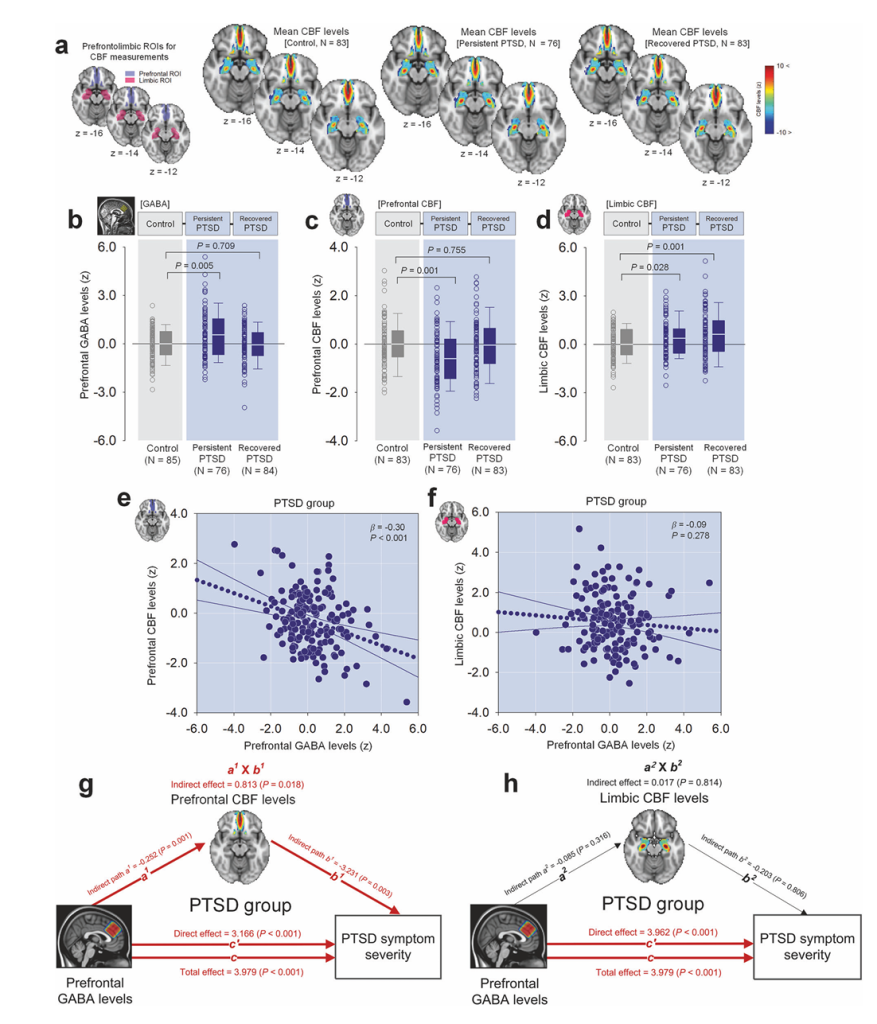
  • Persistent PTSD patients have higher prefrontal GABA levels and reduced prefrontal cerebral blood flow (CBF) compared to healthy controls.

  • Those who recovered from PTSD showed normalized GABA and CBF levels.

  • Elevated GABA was linked to reduced blood flow, suggesting excessive inhibitory signaling disrupts brain metabolism and connectivity.

  • Longitudinal tracking showed PTSD symptom improvement coincides with normalization of prefrontal GABA and CBF, supporting a direct link between GABA imbalance and symptoms.

screenshot 2025 08 03 180207
Persistent PTSD patients showed elevated prefrontal GABA and reduced cerebral blood flow (CBF) compared to controls; recovered patients normalized. Prefrontal GABA negatively correlates with CBF and symptom severity. Where to place: Early in the results section after describing human clinical findings.

Postmortem Findings: Astrocytic GABA Imbalance

Analysis of PTSD brains revealed:

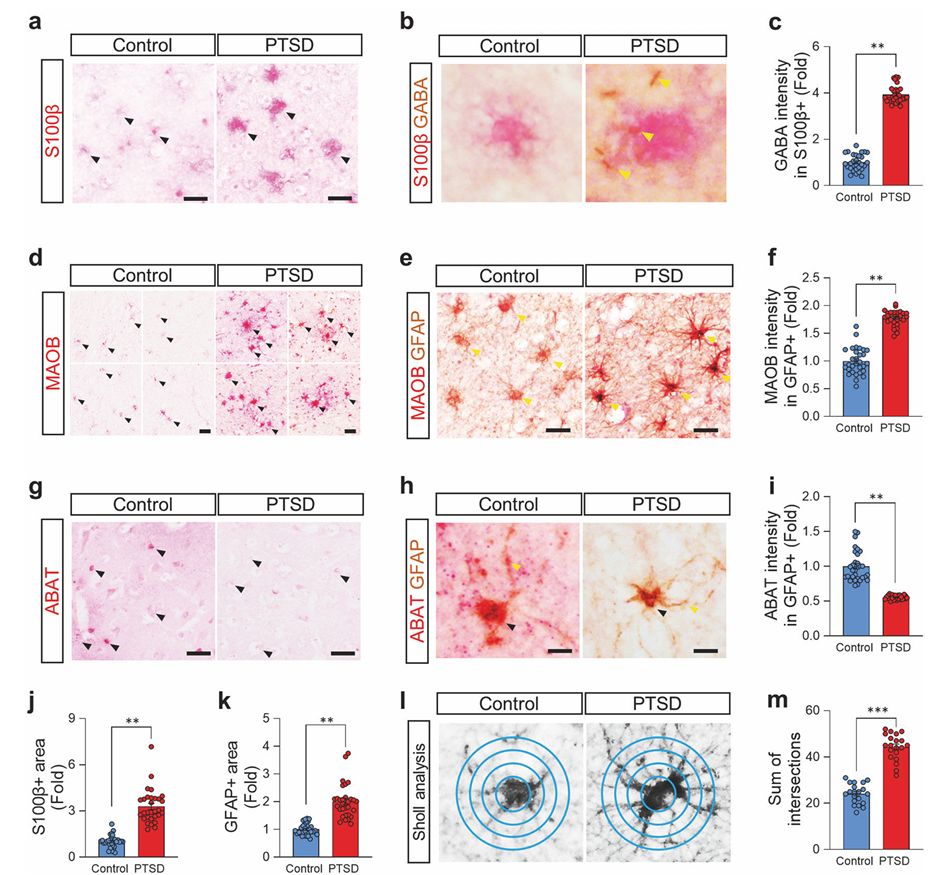
  • Increased GABA inside astrocytes, the brain’s support cells.

  • Elevated expression of MAOB, an enzyme producing GABA in astrocytes, and reduced levels of ABAT, which breaks down GABA.

  • Signs of reactive astrogliosis (astrocyte hypertrophy and increased branching).
    These changes indicate astrocytes produce excess GABA in PTSD, tipping the inhibitory balance.

screenshot 2025 08 03 180316
Increased GABA and MAOB, decreased ABAT in astrocytes from PTSD prefrontal cortex; evidence of reactive astrogliosis in PTSD patients.

Mouse Models Confirm Astrocytic MAOB-GABA Role

In PTSD-like mice:

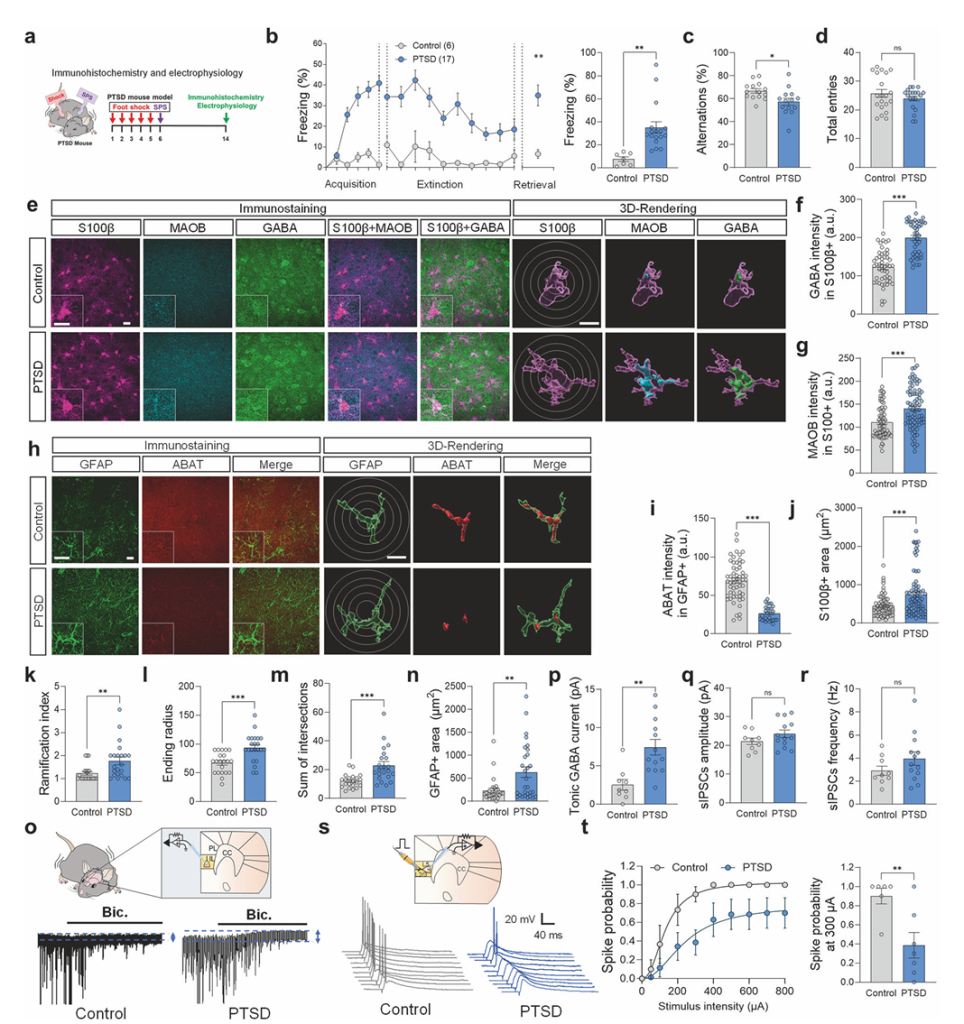
  • Astrocytic GABA and MAOB levels were elevated, with reduced ABAT, mirroring human results.

  • Increased tonic GABA inhibition dampened firing of PFC neurons critical for fear extinction, without altering synaptic inhibition.

  • This inhibitory overdrive impaired fear extinction memory and working memory.

screenshot 2025 08 03 180424
PTSD mice show increased astrocytic GABA and MAOB, decreased ABAT, elevated tonic GABA inhibition on neurons, and impaired fear extinction and working memory.

Genetic Manipulation Shows Causality

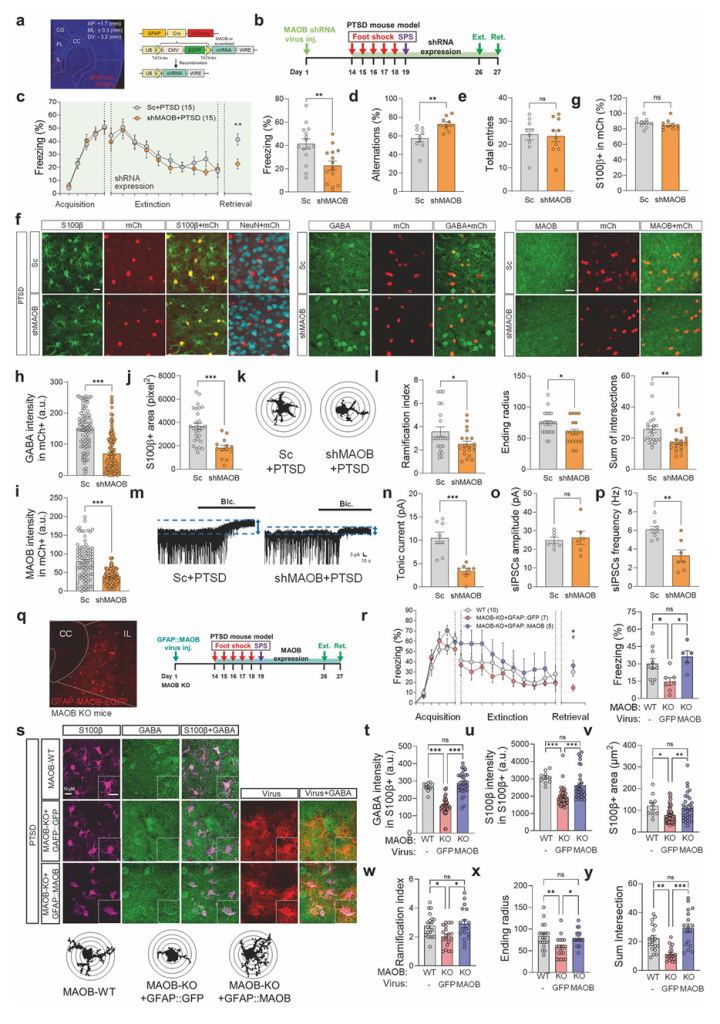
  • Knocking down MAOB specifically in astrocytes of the IL cortex restored normal GABA levels, reduced astrogliosis, and rescued fear extinction and working memory deficits.

  • Conversely, re-expressing MAOB reversed these improvements, proving astrocytic MAOB is both necessary and sufficient for PTSD-like symptoms.

screenshot 2025 08 03 180535
Astrocyte-specific knockdown of MAOB improves fear extinction and memory in PTSD mice; overexpression reverses benefits, confirming MAOB’s causal role.

Pharmacological Therapy: KDS2010

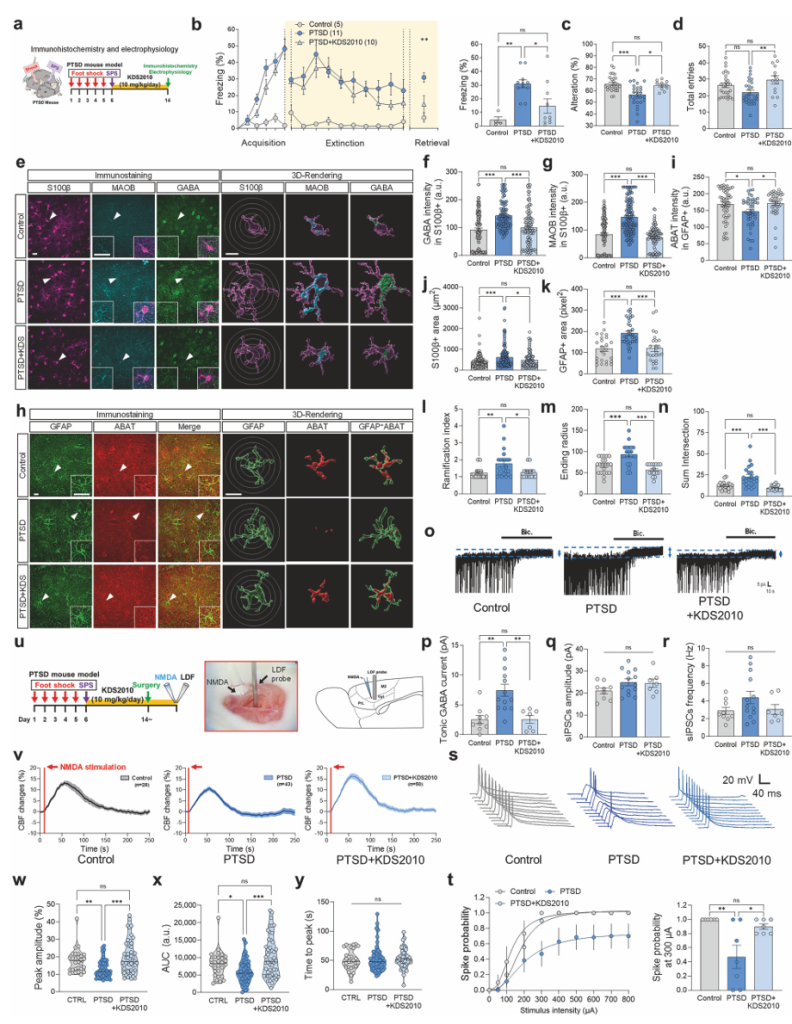
  • KDS2010, a reversible and selective MAOB inhibitor, reversed PTSD-like deficits in mice.

  • It normalized astrocytic GABA, reduced astrogliosis, restored neuronal activity and dopamine signaling, and recovered cerebral blood flow.

  • KDS2010 is now advancing through clinical trials with promising safety and efficacy.

screenshot 2025 08 03 180650

Implications and Future Directions

This work uncovers a new astrocyte-based mechanism in PTSD involving GABA metabolism and neurovascular dysfunction. MAOB inhibition offers a novel, targeted treatment strategy. Future research will explore sex differences, extend findings to other brain regions, and study trauma-exposed resilient individuals.

This study strongly supports the critical role of astrocytic GABA dysregulation in PTSD and introduces KDS2010 as a potential first-in-class therapy to restore prefrontal circuit balance and improve patient outcomes.

You can read the complete article here.

Scroll to Top